
Beyond Detox: The Lymphatic Drainage Ritual Your Stagnant Scalp Has Been Secretly Craving.
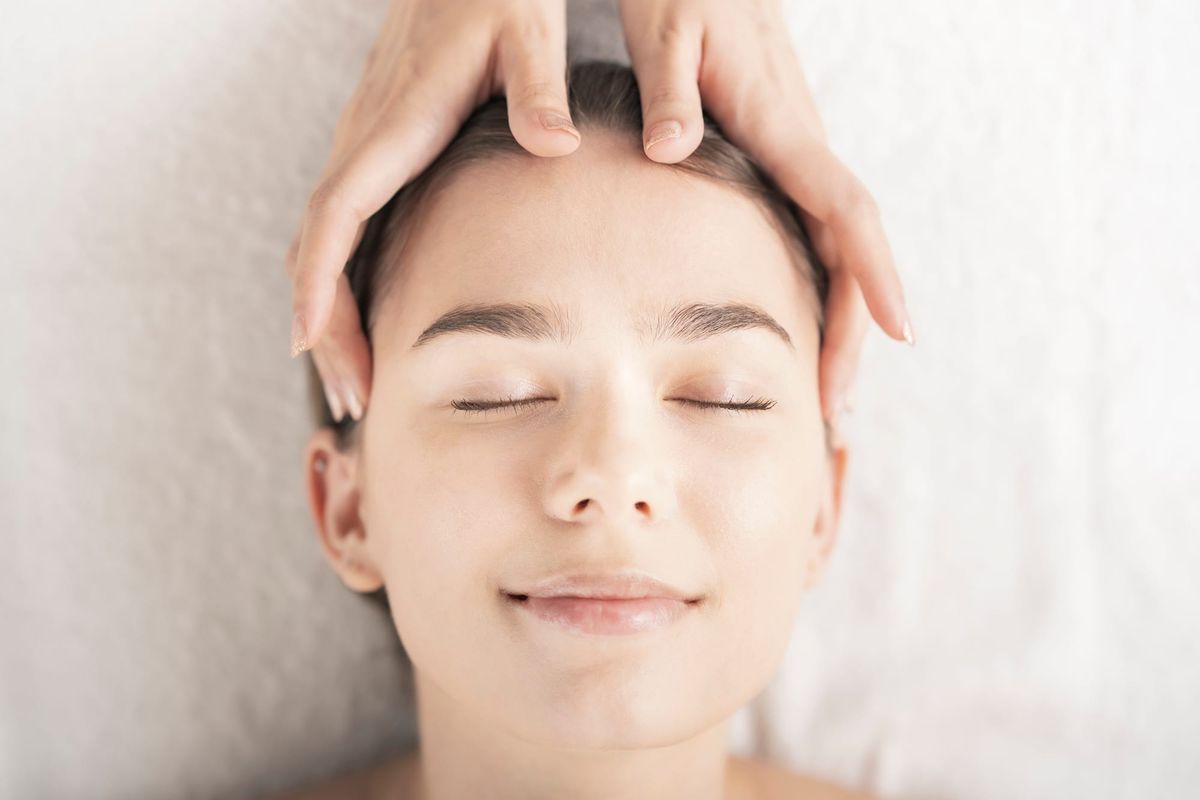
Hypothesis: The Limitation of Surface-Level Treatments
The term 'scalp detox' has saturated the market, promoting scrubs, clays, and clarifying shampoos as the definitive solution for scalp distress. The underlying premise is that external buildup-product residue, oils, environmental pollutants-is the primary antagonist to scalp health. This premise is incomplete.
Our hypothesis is that for many individuals experiencing persistent scalp issues like puffiness, tenderness, lackluster hair, and inhibited growth, the problem is not merely epidermal. It is systemic. The root cause is often a congested lymphatic system, a biological network responsible for waste clearance that operates entirely beneath the surface. Topical treatments, while useful for surface cleaning, cannot address this internal stagnation.
Proof: Analyzing the Scalp's Lymphatic Network
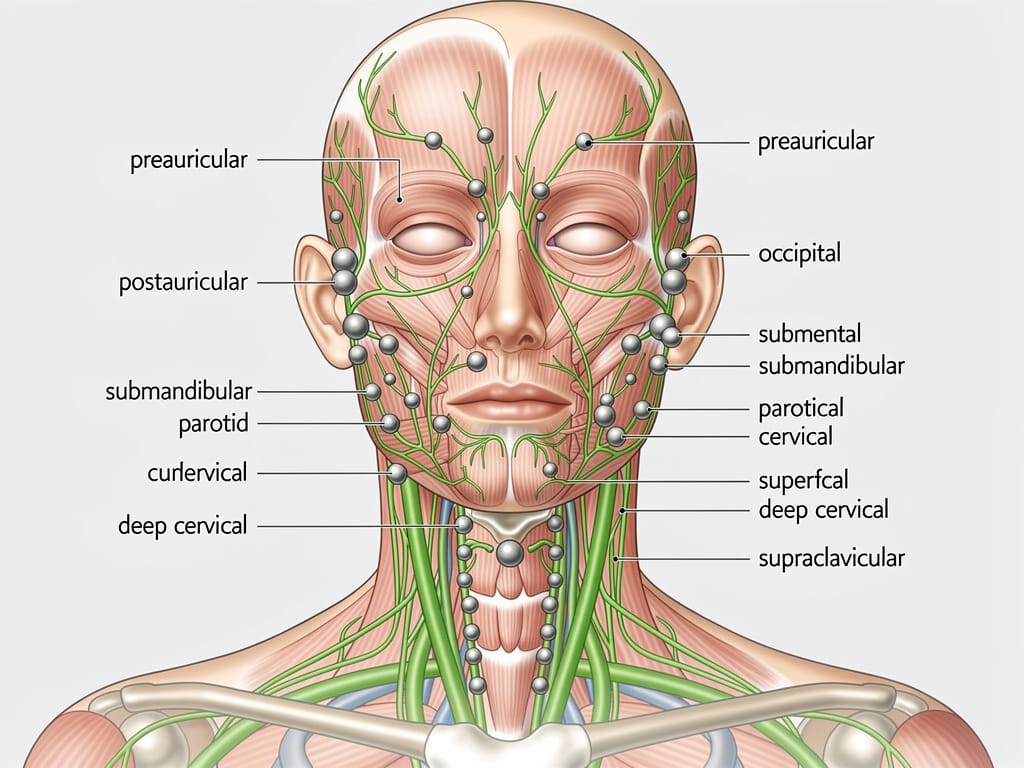
The lymphatic system is a critical component of your body's circulatory and immune functions. It is a complex network of vessels and nodes that transports lymph-a fluid containing white blood cells and metabolic waste products-away from tissues. Think of it as your body's internal sanitation department. When this system functions optimally, cellular waste is efficiently removed, and nutrient delivery is unimpeded. When it becomes stagnant, the consequences are tangible.
On the scalp, a congested lymphatic system leads to an accumulation of metabolic byproducts and inflammatory fluids. This environment is counterproductive to healthy follicle function. The observable data points of a stagnant scalp include:
- Persistent Puffiness or a 'Boggy' Feeling: A direct result of fluid retention and trapped waste.
- Scalp Tenderness or Sensitivity: Often linked to low-grade, chronic inflammation.
- Dull, Lifeless Hair: Follicles are deprived of optimal nutrient flow and operate in a stressed environment.
- Slowed Hair Growth: A congested environment can inhibit the anagen (growth) phase of the hair cycle.
- Flakiness Unresponsive to Anti-Dandruff Shampoos: Sometimes, the issue isn't fungal but is instead an inflammatory response to trapped waste.
Treating only the surface of the scalp while ignoring the drainage system beneath it is akin to mopping the floor while a pipe is slowly leaking. You are managing a symptom, not resolving the cause.
The Protocol: Manual Lymphatic Drainage for the Scalp
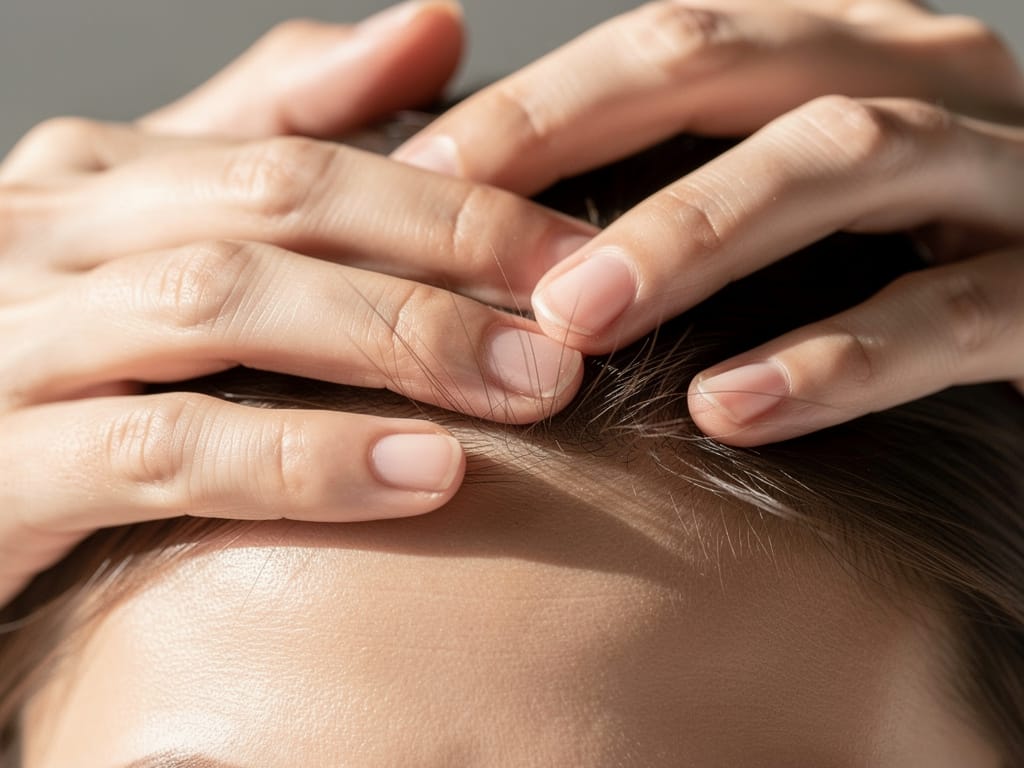
Manual Lymphatic Drainage (MLD) is a specific, light-touch modality designed to stimulate the flow of lymph. This is not a deep-tissue massage; excessive pressure can flatten and block the delicate lymphatic vessels you are trying to clear. The objective is to use gentle, rhythmic motions to manually guide stagnant fluid toward major lymph nodes for processing.
Core Principles
Before beginning, understand the fundamentals. Pressure must be extremely light-just enough to gently stretch the skin. The direction of your movements is also critical. All strokes on the scalp should be directed down and out, toward the lymph nodes located around the ears, jaw, neck, and collarbones.
Step-by-Step Execution
Perform this ritual on a dry scalp before showering, 3-5 times per week.
- Activate the Terminus Nodes: Begin by gently 'pumping' the hollows just above your collarbones with your fingertips 5-10 times. This opens the primary drainage points.
- Neck and Behind the Ears: Using flat fingers, gently stroke down the sides of your neck, from just behind your earlobes to your collarbone. Repeat 5 times on each side.
- Occipital Drainage: Place your fingertips at the base of your skull (occipital bone). Gently stroke downwards towards the back of your neck. Repeat 5-7 times.
- Crown and Parietal Strokes: Place your fingers on the very top of your head (the crown). Gently stroke downwards and outwards, moving over the parietal bones (the sides of your head) towards your ears. Imagine you are guiding fluid down the sides of a hill. Repeat this motion across the entire top of your scalp.
- Frontal and Temple Drainage: Place your fingers on your hairline at the forehead. Gently stroke outwards towards your temples, and then down in front of your ears. Repeat 5-7 times.
Conclusion: A Shift from Topical Correction to Systemic Health
The evidence indicates that a truly healthy scalp is the result of both external hygiene and internal circulatory efficiency. While clarifying shampoos have their place, they are an insufficient protocol for addressing the chronic, low-grade stagnation that undermines hair vitality at a cellular level. Integrating manual lymphatic drainage into your routine moves beyond temporary, topical fixes. It is a foundational practice that supports the scalp's biological infrastructure, creating the optimal conditions for long-term health and robust hair growth by addressing the problem at its source.