
Rethinking Hair Porosity
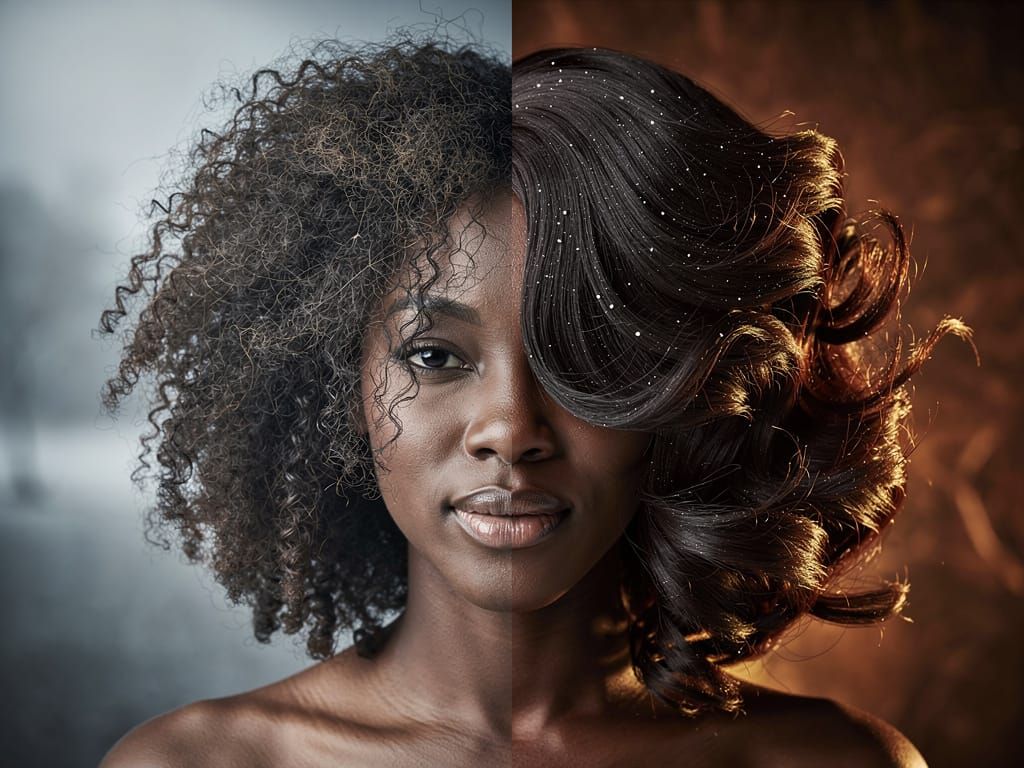
You followed every instruction. You deep-conditioned for thirty minutes. You used the 'right' products for your curl pattern. And your hair still felt like straw by Tuesday morning.
The routine wasn't the problem. The framework was.
Somewhere in the last decade, the hair care world handed us a single diagnostic tool and told us it explained everything. Porosity. Low, medium, high. Three boxes. Pick one. Buy accordingly.
Here's the truth: that model is incomplete - and for a significant portion of people, it's actively leading them in the wrong direction.
What the Standard Porosity Model Actually Measures
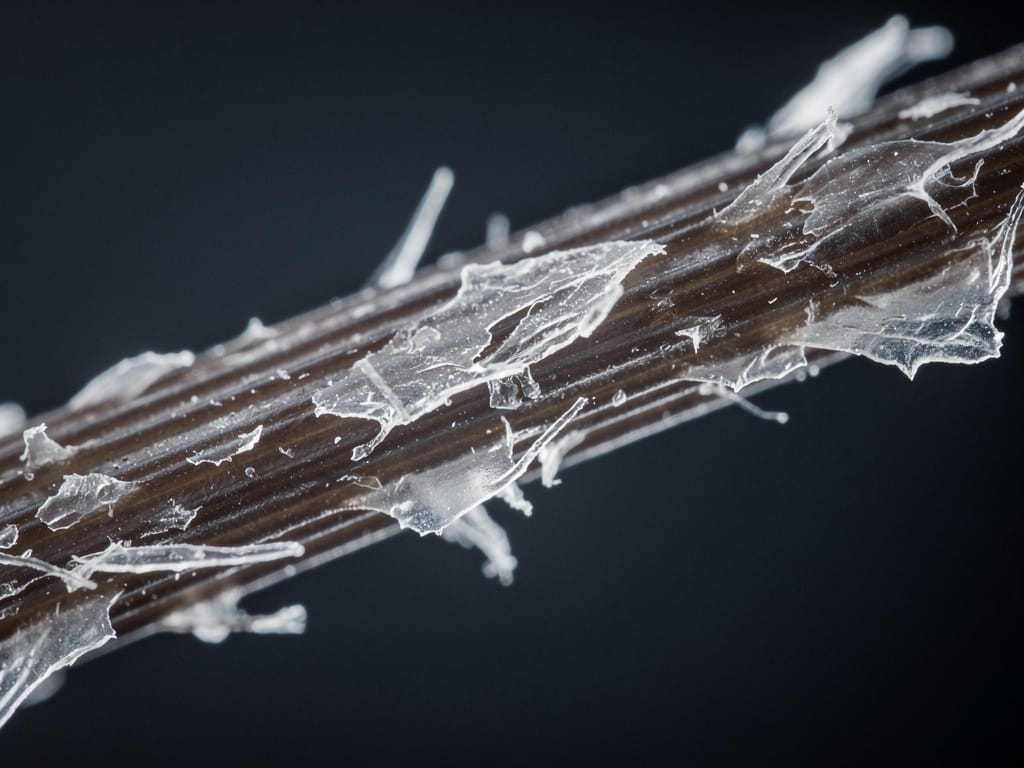
The standard model is built on one structural variable: the state of your hair's cuticle layer.
- Low porosity: Cuticle scales lie flat and tightly overlapping. Water and product struggle to penetrate.
- Medium porosity: Cuticle is slightly raised. Moisture enters and exits at a balanced rate.
- High porosity: Cuticle scales are lifted, damaged, or have gaps. Moisture absorbs fast - and escapes just as fast.
The logic is clean. The problem is that it treats the cuticle as the only variable in a system with dozens.
It ignores cortex density. It ignores protein-moisture balance at the fiber level. It ignores the fact that a single head of hair can exhibit multiple porosity states simultaneously - roots behaving differently from mid-lengths, chemically processed sections behaving differently from new growth.
Key finding: Porosity is not a fixed trait. It is a dynamic condition influenced by chemical history, mechanical stress, water mineral content, and even scalp health. Treating it as a permanent category is the first analytical error.
The Float Test Problem
Let's address the diagnostic method directly.
The float test - dropping a strand of hair into a glass of water and observing whether it sinks or floats - is the most widely cited porosity test in consumer hair care. It is also deeply unreliable.
- Product buildup on the strand creates a hydrophobic barrier, causing even high-porosity hair to float.
- Water temperature affects surface tension and alters the result.
- The test measures one moment in time on one strand, then asks you to make product decisions for your entire head.
A more honest diagnostic approach involves observation over time:
- How long does your hair take to become fully saturated in the shower?
- Does moisture seem to disappear within hours, or does your hair stay hydrated for days?
- How does your hair respond to protein treatments - does it feel stronger or more brittle afterward?
These behavioral patterns give you actionable data. A glass of water does not.
Porosity as a Spectrum, Not a Category
Here's where the model needs to be rebuilt from the ground up.
Think of porosity not as a label but as a real-time reading of your hair's current capacity to absorb and retain moisture. That reading shifts based on:
- Seasonal humidity changes - high humidity environments cause the cuticle to swell, temporarily increasing porosity behavior even in low-porosity hair.
- Water hardness - mineral deposits from hard water physically block cuticle gaps, mimicking low-porosity behavior in hair that is structurally high porosity.
- Heat styling frequency - repeated thermal stress progressively degrades the cuticle, shifting hair along the porosity spectrum over months.
- Chemical services - a single relaxer or bleach session can permanently alter the cortex structure, making porosity categorization from before that service irrelevant.
The practical implication is significant. Your hair care protocol should not be static. It should be responsive.
A More Useful Framework
Instead of asking 'what is my porosity type,' start asking better questions.
- What is my hair telling me right now - is it resisting moisture or losing it too fast?
- Has anything changed in my chemical history, water source, or environment recently?
- Am I addressing the cuticle, the cortex, or both with my current routine?
This is the shift from consumer-level categorization to biological observation.
Porosity is real. The science behind cuticle behavior is solid. But the three-box system was built for product marketing convenience - not for the complexity of living hair.
The conclusion is straightforward: Use porosity as one data point among many. Observe your hair's behavior across seasons and after any chemical change. Build a routine that adapts - because your hair already does.
The float test gave you a starting point. Now it's time to go further.