
The Air-Dry Paradox: Why Your "No Heat" Rule Might Actually Be Damaging Your Hair
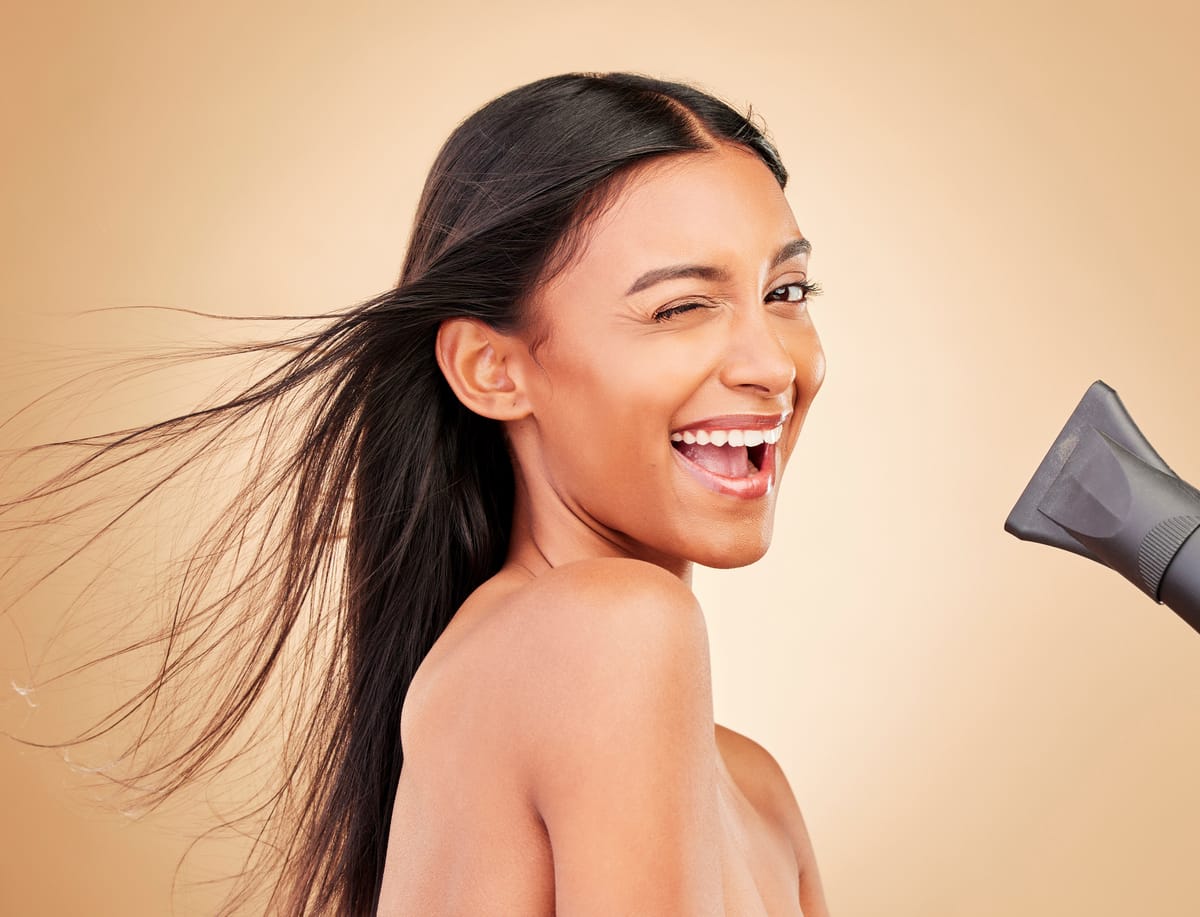
For years, we have been told that heat is the enemy. We are taught that if we want healthy, shiny hair, we should ditch the blow dryer and let our hair air dry whenever possible. It sounds logical, doesn't it? No heat means no damage. But as someone who has studied the physical structure of the hair fiber for over fifteen years, I have to tell you that this is a dangerous oversimplification.
In fact, for many people—especially those with thick or high-porosity hair—air drying can be significantly more damaging than a controlled, mindful blow dry. It is called the Air-Dry Paradox, and understanding it is the key to stopping "mystery" breakage and frizz.
The Science of Hygral Fatigue
To understand why air drying can be problematic, we have to look at what happens inside the hair shaft when it is wet. Hair is a protein structure that can absorb up to 30 percent of its weight in water. When your hair is wet, the inner part (the cortex) swells. This swelling puts massive pressure on the outer layer (the cuticle).
Think of it like a balloon that you have inflated just a little too much. The surface becomes tight and vulnerable. When you leave your hair to air dry for three, four, or even five hours, your hair stays in this "swollen" and vulnerable state for a long time. This constant swelling and contracting is called hygral fatigue. Over time, it weakens the cell membrane complex that holds your hair together, leading to a loss of elasticity and eventual snapping.
The "Soggy Cuticle" Effect
While your hair is wet, the cuticle scales stay slightly raised. In this state, your hair is much more prone to friction damage. If you are air drying while you go about your day—letting your hair rub against your clothes, your chair, or even your skin—you are essentially "filing down" your cuticles with every movement.
By contrast, a mindful blow dry "sets" the cuticle quickly, locking it down and making the hair much more resilient to the friction of daily life. The goal is not to "cook" the hair with high heat, but to move it through the vulnerable wet stage as efficiently as possible.
The Mindful Blow-Dry Ritual
So, how do we get the benefits of a dryer without the heat damage? It is all about the technique.
- The 70 Percent Rule: Never start blow drying soaking wet hair. Use a microfiber wrap to get at least 70 percent of the moisture out first. This minimizes the amount of time your hair is exposed to the air from the dryer.
- The "Safe Distance" Protocol: Keep the nozzle of your dryer at least six inches away from your hair. Most heat damage happens when the dryer is pressed directly against the strands.
- The Downward Angle: Always point the airflow down the hair shaft, from roots to ends. This helps to physically "close" the cuticle scales, resulting in that glass-like shine we all want.
- Use a Heat Protectant: This is a non-negotiable step. A good heat protectant acts as a thermal buffer, ensuring the moisture inside the hair doesn't boil. You can read a scientific breakdown of how thermal protectants shield the keratin structure for a better understanding of the physics involved.
Making the Choice for Your Hair Type
If you have very fine, low-porosity hair that dries in twenty minutes, air drying is perfectly fine. But if you are someone whose hair stays damp for hours, you are doing more harm than good by "avoiding heat."
The mindful approach is to listen to your hair’s needs rather than following a blanket rule. If your hair feels "mushy" or limp when wet, it is telling you that it needs to be dried quickly. If it feels strong and dries fast, you can afford to let the air do the work.
Stop being afraid of your tools. When used with intention and respect for the biology of your strands, a blow dryer is a protective device, not a destructive one. Take the time to "set" your hair, and you will notice that it stays hydrated and shiny far longer than it ever did when you were leaving it to dry on its own.