
The Elastic Fracture: Why High-Tension Ponytails Create a Permanent Mid-Shaft Snap Zone
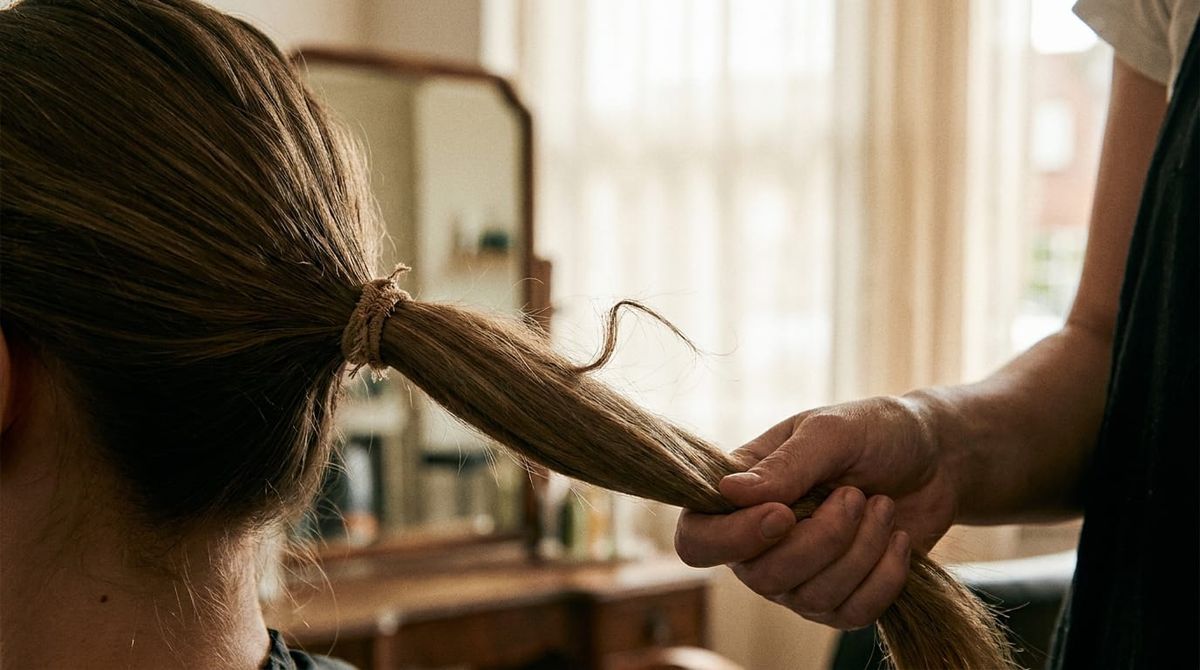
Let's get right to it, because I've seen this countless times over my twenty years in hair care. That super-tight, sleek ponytail you love isn't just causing a headache; it's creating a permanent, weakened fracture point on every single hair shaft, a 'snap zone' that will almost certainly break over time. This isn't temporary stress we're talking about - it's a physical, irreversible injury to the hair's structure, all focused on that one little line where the elastic sits day after day.
Think about it like bending a paperclip back and forth in the exact same spot. At first, it holds up, but you're creating a line of weakness. Eventually, with very little effort, it just snaps. Your hair is incredibly resilient, but it's not invincible. The constant, localized pressure from a tight elastic band does the same thing. It puts a relentless strain on a very specific section of the hair shaft, bending and compressing it far beyond its natural tolerance. It doesn't matter how healthy the rest of the strand is; that one spot becomes its Achilles' heel.
What's Really Happening to Your Hair Cuticle?
Okay, let's zoom in a bit. Your hair shaft is protected by an outer layer called the cuticle, which looks a bit like overlapping shingles on a roof. When your hair is healthy, these 'shingles' lie flat and smooth, protecting the fragile inner core (the cortex). But the intense, focused pressure of a tight hair tie literally pries these scales up. It chips away at them, creating rough patches and cracks. Once that protective layer is compromised, the inner cortex is exposed, and the hair strand loses its strength and moisture right at that point. This damage isn't something a deep conditioner can magically fix; the physical structure is permanently altered.
It's Not Just Breakage - It's a Fracture Line
This is the part that I really want you to hear. The damage creates what I call an 'elastic fracture'. Even if your hair doesn't snap while it's in the ponytail, that line of weakness is now baked in. The next time you brush your hair, wash it, or even sleep on it, the strand is most likely to break right along that pre-damaged line. You'll see those little short, snapped-off pieces and wonder what you're doing wrong, when the real culprit was the hairstyle you wore three days ago. This is why you might notice a sort of 'halo' of shorter, broken hairs that seem to stop at the same length - it's often the ghost of ponytails past.

So, What Can We Do About It?
Listen, I'm not here to tell you to never wear your hair up again. That's just not realistic! Life happens, and sometimes you just need your hair out of your face. The goal here is mindfulness, not perfection. It's about reducing the frequency and intensity of the tension. Try to vary the placement of your ponytail - a little higher one day, a little lower the next. This simple change distributes the pressure and avoids targeting the same spot over and over. And please, I'm begging you, switch to softer hair ties. Silk or satin scrunchies, or even those coiled plastic ties, are so much kinder because they distribute pressure more evenly and don't have the same tight, cutting grip. Most importantly, give your hair days off where it can just be down and free.
Key Takeaways
- High-tension hairstyles create a permanent zone of weakness, or a 'fracture line', along the hair shaft.
- This damage is caused by the constant, focused pressure of a tight elastic, which lifts and breaks the protective cuticle layer.
- Varying the height and location of your ponytails is one of the easiest ways to prevent creating a single snap zone.
- Switch to gentler hair ties, like silk scrunchies or coiled ties, to reduce focused pressure and friction.
- Giving your hair regular 'rest days' where it's worn down and loose is essential for its long-term health.
At the end of the day, caring for your hair is an act of kindness to yourself. It's about understanding what it needs and making small, gentle adjustments. You don't have to sacrifice your favorite styles, but by being more mindful of tension, you can ensure your hair stays strong and healthy from root to tip, without those frustrating mid-shaft snaps.