
The "Wet Bun" Tension Trap: Why Putting Your Hair Up Damp is Creating Permanent Structural "Stretch Marks"
We've all been there. Rushing out the door, you gather your damp hair, twist it into a quick, convenient bun, and get on with your day. It feels productive, like a smart shortcut that tames unruly wet strands while they dry. This single, seemingly harmless habit is one of the most common practices in hair care, yet it’s also one of the most misunderstood. What if that simple twist was setting your hair up for long-term failure?
The truth is, this daily routine is a tension trap. It goes far beyond temporary frizz or a few flyaways; it inflicts permanent, structural damage on each strand. Think of it as creating 'stretch marks' along the hair fiber-weakened points that compromise the integrity of your hair from the inside out. Understanding the science behind this damage is the first step toward breaking the cycle and building a routine that truly supports your hair's long-term biological health. It's time to transform your habits with intention.
The Science of Wet Hair Vulnerability
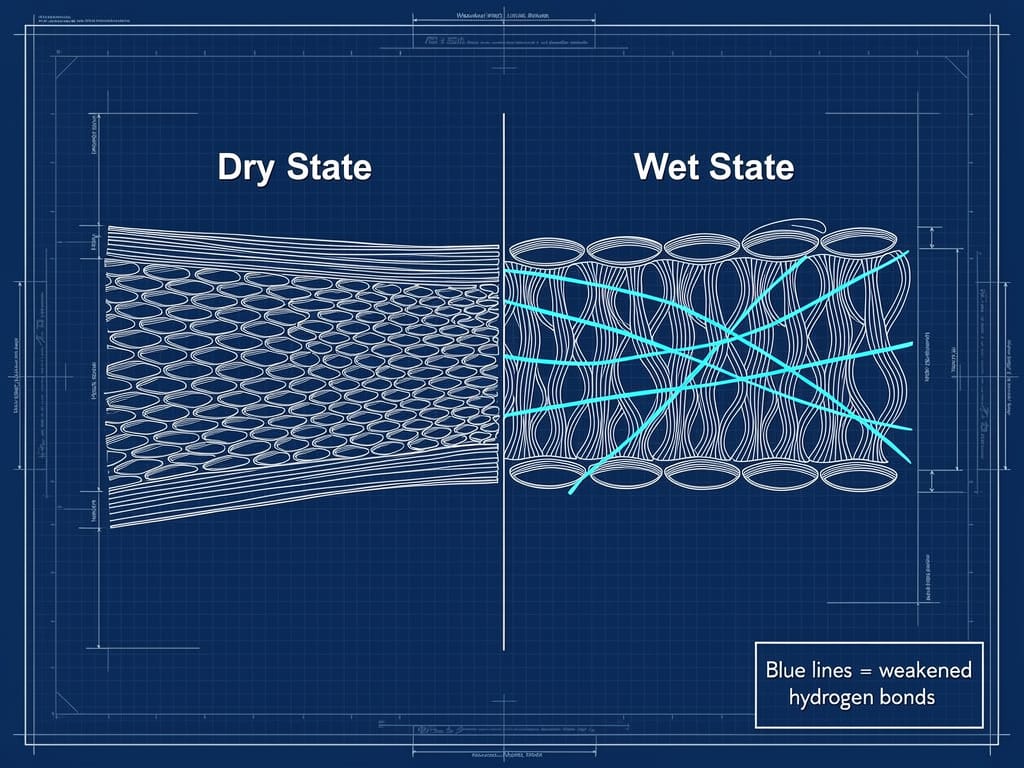
When hair is wet, its entire chemical and physical structure changes. The proteins that form the core of each strand are held together by different types of bonds. While the stronger disulfide bonds provide permanent shape, the weaker hydrogen bonds are responsible for temporary styling. Water breaks these hydrogen bonds, causing the hair to swell and become incredibly elastic and fragile. This state of heightened vulnerability is where the damage begins.
- Extreme Elasticity and Overstretching
- A wet hair strand can stretch up to 30% of its original length without breaking, a significant increase from its dry state. This isn't a sign of health; it's a warning sign of structural weakness.
- Imagine stretching a rubber band to its absolute limit and holding it there for hours. It never fully returns to its original shape or strength. The same thing happens to your hair fibers when they are pulled taut in a bun while wet.
- This constant overstretching creates weakened, thinned-out spots along the hair shaft that are primed for breakage long after your hair has dried.
- The Tension Magnifier Effect
- Securing this hyper-elastic hair into a tight style acts as a tension magnifier. The pulling force is concentrated directly on the scalp and at every twist and turn of the bun.
- This sustained tension on the follicle can, over time, lead to a form of hair loss known as traction alopecia. The constant pulling damages the follicle itself, sometimes permanently.
- The pressure also physically strains the hair shaft at its weakest (wet) point, creating the perfect conditions for snapping and mid-shaft splits.
Unpacking 'Hair Stretch Marks': The Permanent Damage
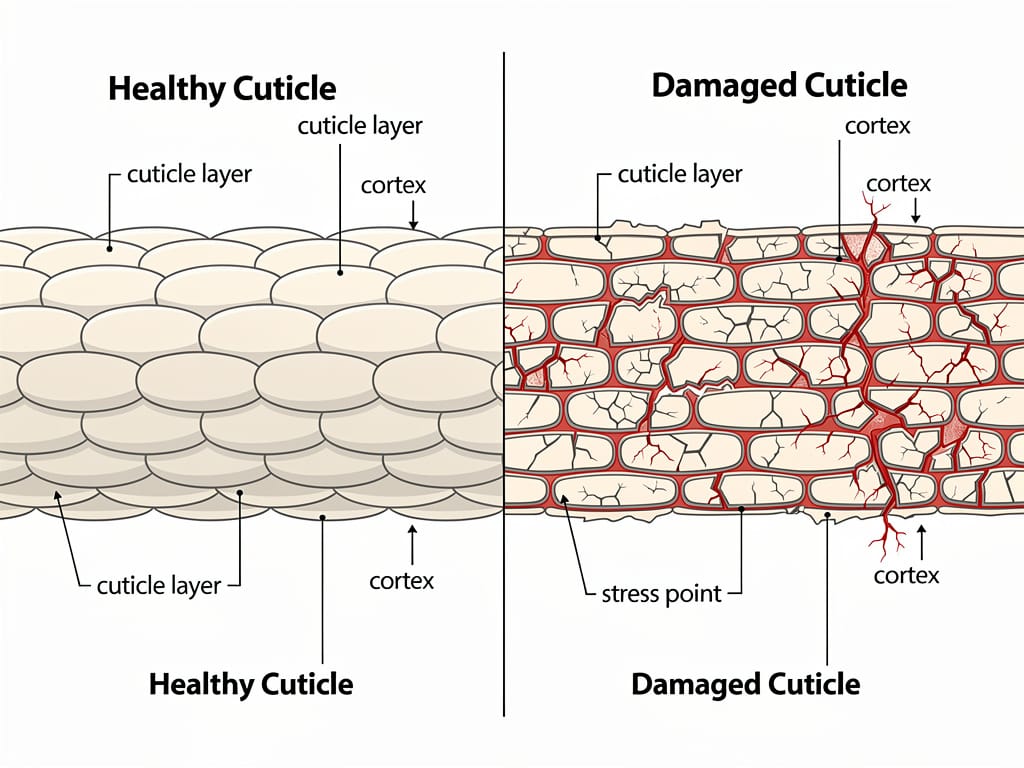
The term 'hair stretch marks' is a powerful metaphor for the invisible but irreversible damage occurring within the hair's structure. While you can't see them like you would on skin, these stress fractures are very real on a microscopic level. They represent a permanent loss of structural integrity that no conditioning mask can fully repair. This is how that simple wet bun leads to chronic hair issues.
- Cuticle Lifting and Chipping
- Your hair's outer layer, the cuticle, is made of overlapping scales that protect the inner cortex. When healthy, these scales lie flat and smooth, reflecting light and preventing moisture loss.
- The tension from a wet bun forces these protective scales to lift, chip, and break off. This creates a rough, porous surface that easily tangles, feels dry, and appears dull.
- Once the cuticle is compromised, it cannot regenerate. This is permanent damage that exposes the delicate inner layers of your hair to further harm.
- Internal Cortex Fractures
- The real 'stretch marks' happen inside the hair's core, or cortex. As the hair is stretched past its breaking point and held there, tiny micro-fractures develop within its protein structure.
- These internal fractures are the ticking time bombs of hair care. They create weak points that will eventually give way, leading to split ends and breakage that seems to appear out of nowhere.
- This is often why hair appears to 'stop growing' at a certain length. In reality, it is breaking off at the ends as quickly as it is growing from the root, all due to accumulated structural damage.
Making a change doesn't require a complete overhaul of your routine, but it does require a shift in mindset. That convenient shortcut is costing you the health and length of your hair in the long run. The most powerful action you can take is to simply give your hair time. Allow it to air-dry at least 80% of the way before you even think about putting it up. If you must tie it back, use a gentle silk scrunchie and keep it loose. This small, mindful adjustment is a profound act of care that protects your hair's integrity and honors its biology, ensuring it stays strong from root to end.