
The 'Wet Stretch' Error Snapping Your Hair Mid-Shower

Understanding Hair's Vulnerability When Wet
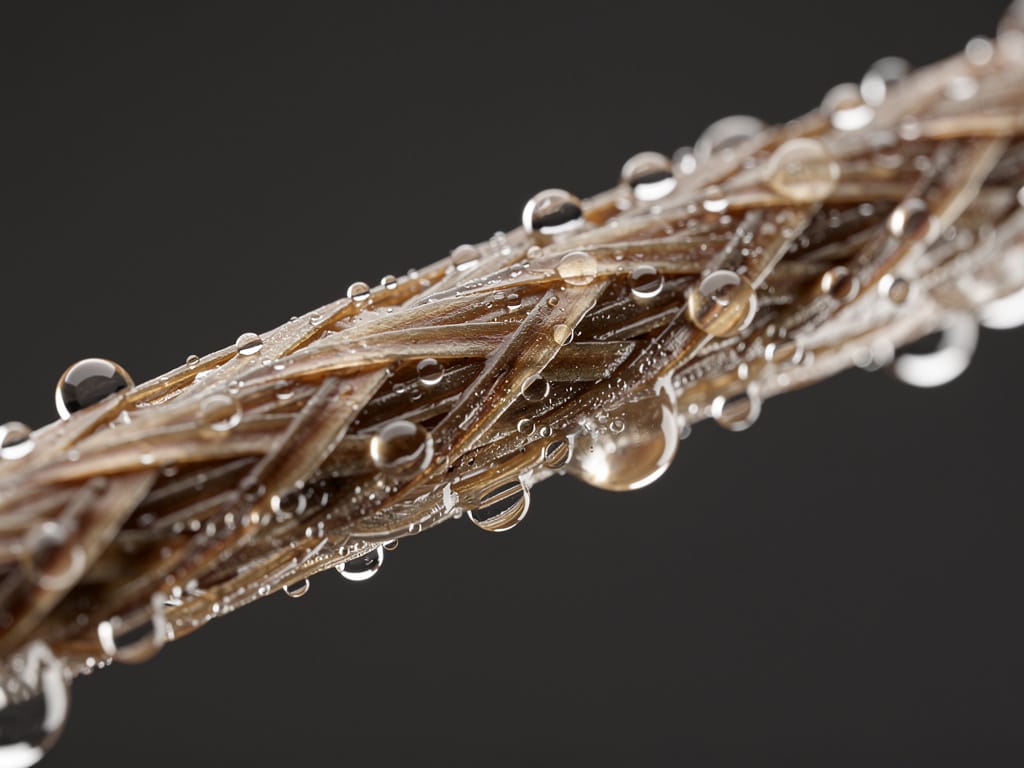
That collection of short, broken hairs you find on the shower wall isn't just random shedding. It's often the direct result of a common handling mistake we call the 'wet stretch' error. To understand why this happens, you have to look at the hair's structure on a microscopic level. A single strand is composed of keratin proteins held together by two types of bonds: strong disulfide bonds and weaker hydrogen bonds. When hair becomes saturated with water, the hydrogen bonds temporarily break, causing the hair's inner cortex to swell. This process dramatically increases the hair's elasticity, allowing it to stretch up to 50% of its original length without breaking-but it also makes it incredibly fragile.
Think of a dry strand of hair like a sturdy rope, and a wet strand like a waterlogged, overstretched rubber band. While the wet strand can stretch much further, its actual breaking point-the amount of tension it can handle before it snaps-is significantly lower. This isn't a design flaw; it's simply the biophysical reality of hair's interaction with water. The problem arises when we apply force and friction to the hair while it's in this compromised, hyper-elastic state. The very actions we think are 'cleaning' our hair are often the ones creating the tension that leads to irreversible mid-shaft breaks and split ends.
The Mechanics of the 'Wet Stretch' Error
The 'wet stretch' error occurs during the most routine parts of your shower. It's the aggressive scrubbing of shampoo into your lengths, piling your hair into a sudsy mountain on top of your head, or raking conditioner through tangled strands with your fingers. Each of these motions applies a pulling force. When you pull on wet hair, you are stretching that already-weakened structure to its absolute limit. The friction from your hands or from strands rubbing against each other creates weak points along the hair shaft, which is where the snap eventually happens.
This is purely a matter of physics. The combination of tension and friction on a structurally compromised material will inevitably lead to failure. When you detangle with force, you are not just separating knots; you are elongating individual strands past their point of no return. This is why you often see those tiny, snapped pieces of hair in the drain. They are not falling from the root. They are breaking mid-strand, a direct consequence of mechanical stress applied at the hair's moment of maximum vulnerability.
Corrective Techniques for In-Shower Care
Preventing this damage requires a shift in technique from aggressive cleaning to mindful handling. First, stop scrubbing your lengths. Your scalp is what needs cleansing; focus your shampoo application there using the pads of your fingers. The suds that rinse down the hair shaft are more than sufficient to clean the lengths without causing friction. When it's time for conditioner, don't rake it through. Instead, emulsify the product between your palms and gently glaze it over the surface of your hair, section by section. This coats the strands without introducing unnecessary tension.
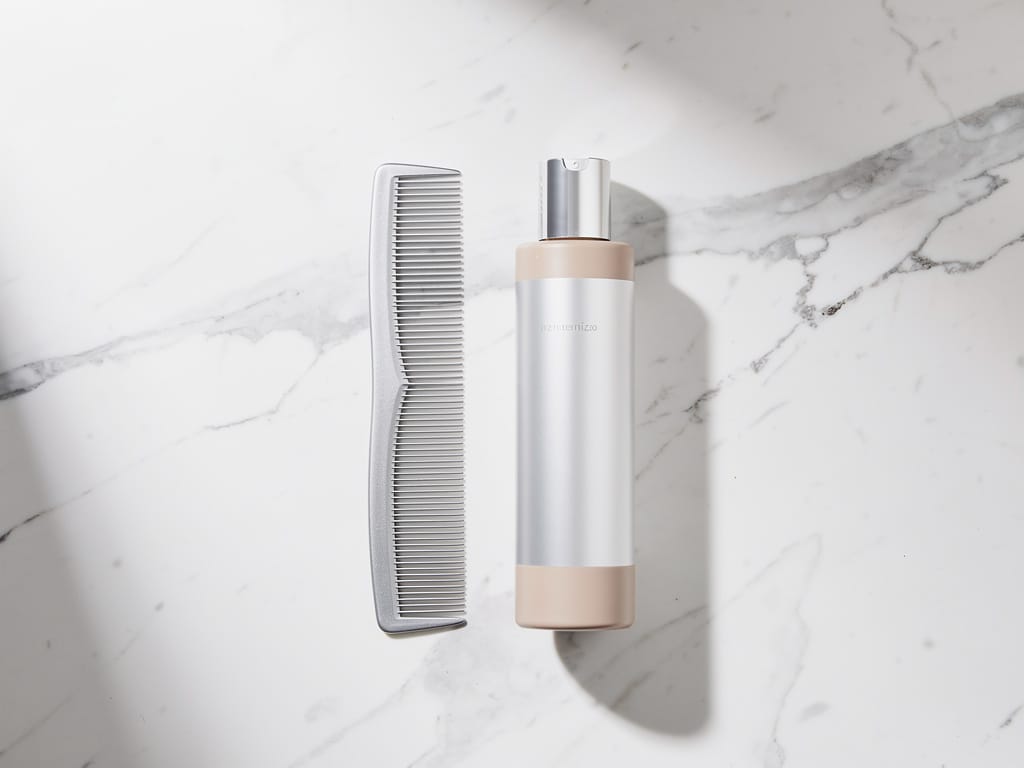
Once the conditioner is applied and has had a moment to soften the hair, you can begin to detangle-but only with the right tool. A wide-tooth comb with smooth, seamless teeth is non-negotiable for wet hair. Fingers, no matter how gentle you think you are, will catch on tangles and create too much focused tension. Begin combing from the ends of your hair and slowly, patiently work your way up toward the roots. Detangling from the bottom up ensures you are only working through a few inches of hair at a time, which prevents the comb from dragging through a large knot and stretching the entire strand to its breaking point.
Beyond the Shower: Post-Wash Best Practices
The risk of the 'wet stretch' error doesn't end when you turn off the water. The way you dry your hair is equally important. The common practice of vigorously rubbing hair with a rough cotton towel is one of the most damaging things you can do. This motion creates a massive amount of friction, roughs up the hair's protective cuticle layer, and continues to stretch the still-vulnerable strands, leading to a halo of frizz and breakage. Wrapping your hair tightly in a heavy towel turban can also place consistent tension on the delicate hairline, leading to traction-related damage over time.
The solution is to remove the friction. Swap your standard bath towel for a soft microfiber towel or even a clean cotton t-shirt. Instead of rubbing, gently squeeze and blot sections of your hair to absorb excess moisture. This method removes water effectively without causing mechanical stress or disturbing the cuticle. This simple adjustment has a profound impact on the long-term health of your hair, preserving its integrity as it transitions from its weak, wet state to its strong, dry state. Adopting these mindful practices is the foundation for achieving hair that is genuinely healthy from the inside out.