
You Are Brushing Your Hair Wrong: The 3-Step Ritual to Stop Unnecessary Shedding

It sounds so basic, doesn't it? You have been brushing your hair since you were a toddler. But after years of working with clients, I can tell you that the way most people brush their hair is closer to "aggressive weeding" than it is to "grooming." If you find a massive clump of hair in your brush every morning, or if you see tiny, broken hairs all over your bathroom sink, the problem isn't your genetics. It is your technique.
Mechanical damage is the most common cause of hair thinning that I see. We spend hundreds of dollars on serums but then we rip a plastic brush through our delicate strands while they are wet and vulnerable. It is a ritual of destruction that we perform twice a day without even thinking.
The Science of the Snap
When hair is wet, it can stretch up to 30 percent of its original length. That sounds like a good thing, but it actually means the internal bonds are weakened. When you pull a brush through wet hair, you are stretching those fibers to their breaking point. Even when the hair is dry, the "top-down" brushing method—starting at the roots and pulling through to the ends—creates a "knot-stacking" effect. You are essentially taking small tangles and pushing them together into one giant, unbreakable knot, which you then eventually snap off with the brush.
The Mindful Brushing Ritual
To save your density and keep your ends thick, you need to transition to a mindful, bottom-up approach.
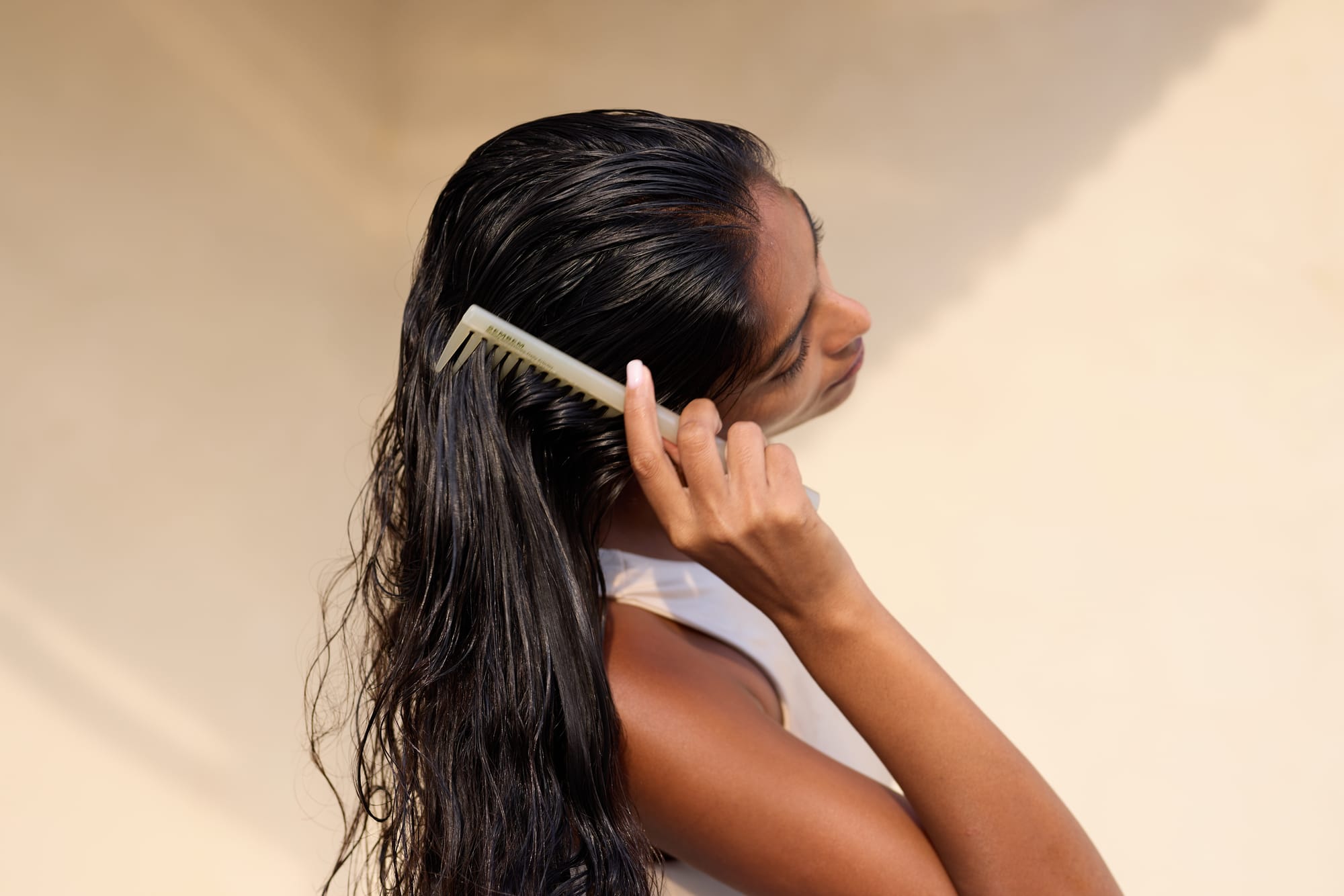
- Step One: The "Bottom-Up" Clearance: Always, always start at the very ends of your hair. Hold a section of hair in your hand to "anchor" it, so you aren't pulling on the follicle. Gently clear the last two inches, then move up to the mid-lengths, and finally to the roots. This prevents the "knot-stacking" and ensures each tangle is handled individually.
- Step Two: The Tool Audit: Throw away any brush with those tiny plastic "balls" on the end of the bristles. Once those balls fall off, the metal or plastic underneath acts like a tiny knife, slicing your hair cuticle with every stroke. Invest in a high-quality boar bristle brush for dry hair and a dedicated "flex" brush for wet hair. You can learn more about how bristle material affects hair friction and cuticle health in various material science journals.
- Step Three: The "Sandwich" Method: Before brushing, apply a tiny amount of a "slip" agent—like a lightweight leave-in conditioner or a drop of jojoba oil. This creates a "sandwich" of protection between your hair and the bristles, allowing the brush to glide rather than grind.
The Evening Ritual
I recommend a thorough brushing ritual right before bed. This isn't just about detangling; it is about moving the natural oils from your scalp down to your dry ends. Think of your scalp’s sebum as the best, most expensive hair mask you will ever own. By gently brushing from root to tip (once the tangles are cleared), you are providing a natural, protective coating that keeps your hair hydrated while you sleep.
Stop looking at brushing as a chore and start looking at it as a form of "hair meditation." Slow down. Be gentle. Treat each strand like it is made of fine silk, because, in many ways, it is.