
Your Bath Towel is a Chainsaw: The 60-Second Shower Habit That is Snapping Your Ends in Half
You just spent twenty minutes on a mindful wash. You used the clarifying shampoo, applied the deep conditioner with the precision of a surgeon, and finished with the perfect tepid rinse. You feel like a goddess of hair care. But then, you step out of the shower and perform a ritual of destruction that I see in nearly every bathroom across the country. You grab that heavy, fluffy, high-pile cotton towel and you start rubbing your hair like you are trying to start a fire.
As someone who has spent fifteen years examining hair fibers under a microscope, I have to tell you: your favorite bath towel is essentially a chainsaw for your hair cuticles. If you have been wondering why your ends look frayed even though you never use a flat iron, the culprit is likely hanging on the back of your bathroom door.
The Physics of the "Wet Snap"
When your hair is wet, it is in its most vulnerable state. Water enters the hair shaft, causing the internal hydrogen bonds to break and the hair to swell. This lifts the cuticle scales and makes the entire strand incredibly elastic and fragile. In this state, your hair has almost zero resistance to friction.
Now, think about the texture of a standard cotton towel. Those loops of fabric are designed to be absorbent, but they are also incredibly rough at a microscopic level. When you rub that towel against wet hair, those loops act like thousands of tiny "hooks" that grab onto your raised cuticles. Every back and forth motion is literally snapping off pieces of your hair’s protective outer layer. This leads to what we call mechanical frizz: damage that no oil or serum can truly "fix" because the shingles of the hair's roof have been ripped off.
The Weight of the World
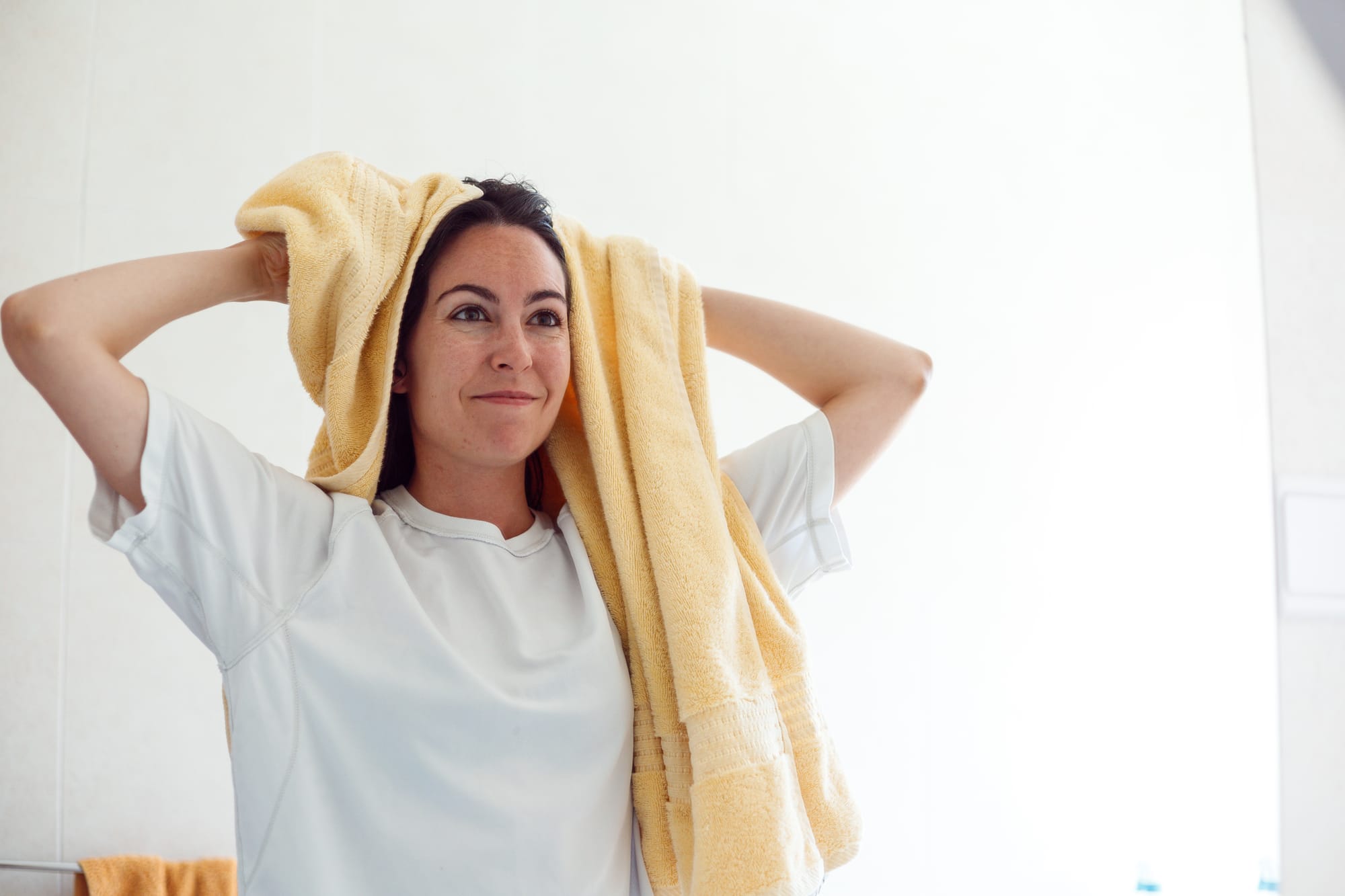
It is not just the rubbing that is the problem. It is the weight. Most of us flip our heads upside down and wrap that massive, heavy bath towel into a "turban." This puts an incredible amount of tension on the hair follicles around your hairline and the nape of your neck.
When you combine the weight of the water-soaked hair with the weight of a heavy cotton towel, you are creating a "traction" event. Over time, this constant pulling on wet, elastic hair can lead to thinning around the temples and a loss of density. You can explore more about the structural changes in the hair fiber when wet to see the science of why wet hair is so prone to this type of mechanical failure.
Actionable Step 1: The "Microfiber" or "T-Shirt" Swap
The most effective thing you can do for your hair health tonight costs zero dollars if you have an old t-shirt. Switch your bath towel for a smooth, flat-knit cotton t-shirt or a dedicated high-quality microfiber hair wrap. These fabrics do not have those "hooks" I mentioned. They allow the water to be absorbed without catching on the cuticle.
Actionable Step 2: The "Press and Pulse" Method
Stop the rubbing motion immediately. Instead, use the "Press and Pulse" technique. Take your t-shirt or microfiber wrap and gently press it into sections of your hair. Squeeze firmly, hold for three seconds, and release. This uses pressure to move the water into the fabric rather than friction to "wipe" it off. It takes an extra sixty seconds, but it saves months of growth from snapping off.
Actionable Step 3: Ditch the Turban
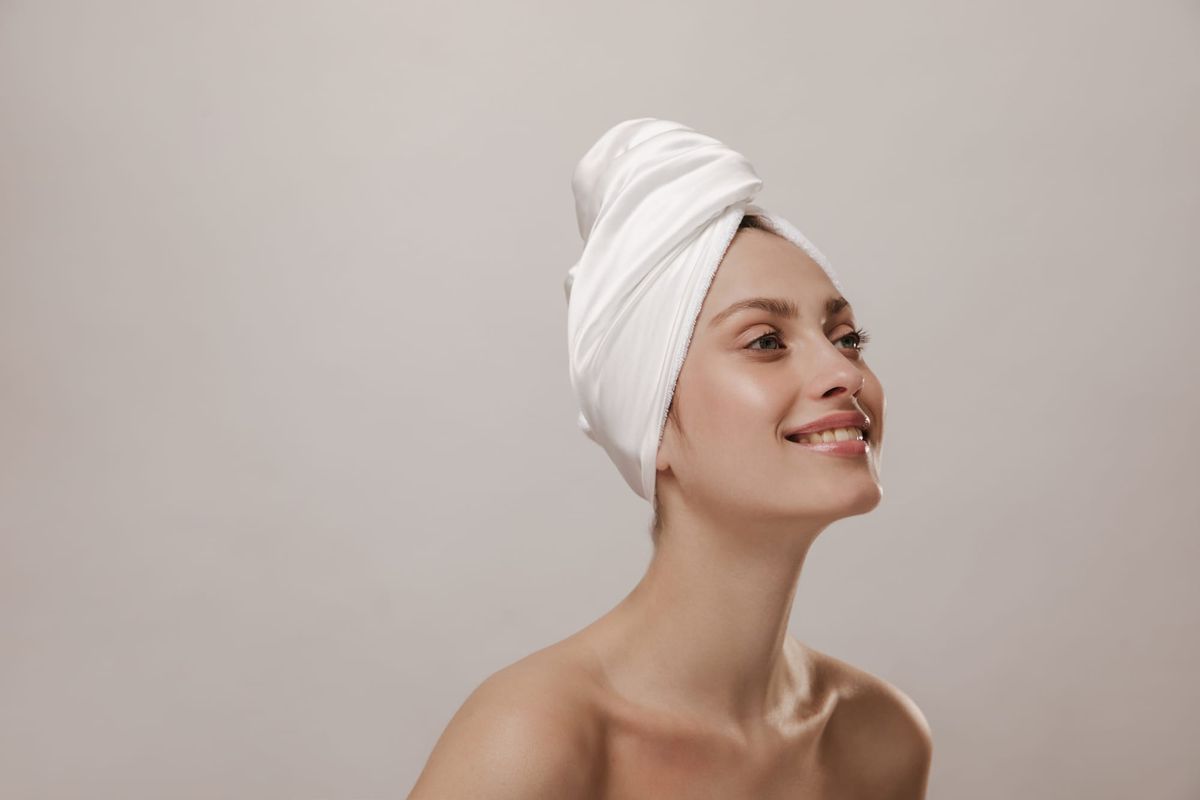
If you must wrap your hair to get it out of the way, do it loosely and only with a lightweight wrap. Ensure the "anchor" of the wrap is on your forehead, not pulling on your delicate baby hairs at the hairline. Your hair should feel supported, not "pulled."
The Result: The "Quiet" Hair Transformation
By making this one simple change, you are removing the single biggest source of daily mechanical damage. Within three to four weeks, you will notice that your "frizz" has significantly decreased. Your hair will feel smoother when it dries, and you will find far fewer broken "white dots" on your ends.
Mindful hair care is often about what we stop doing. Stop treating your hair like a rugged piece of denim and start treating it like the fine, delicate silk that it is. Your towel should be a soft landing, not a source of stress.